
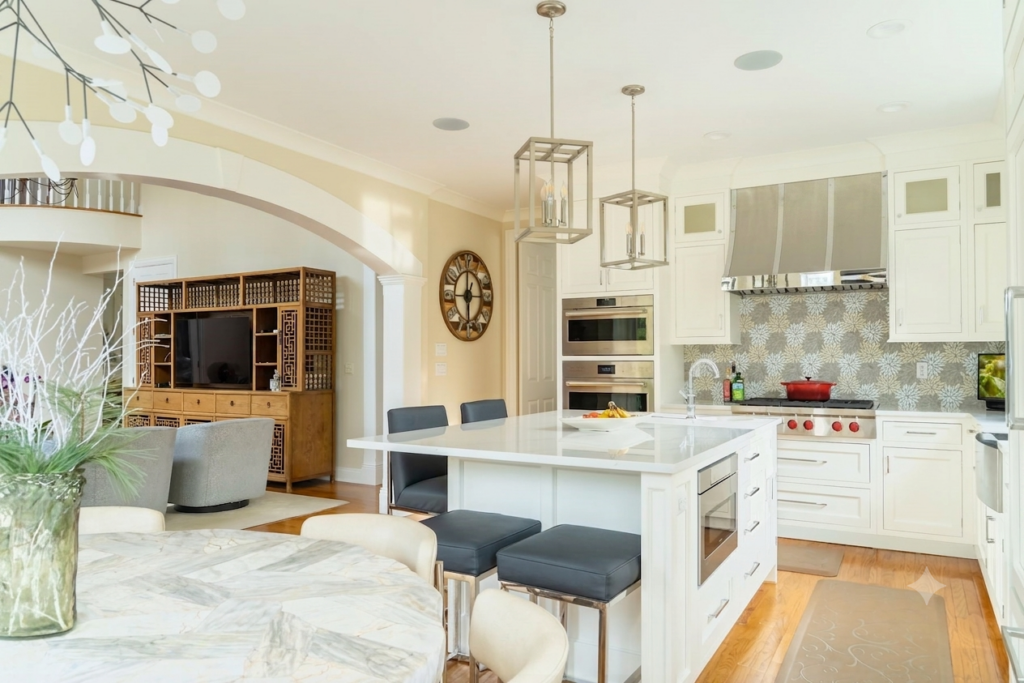
Choosing between a top vent and a rear vent range hood depends on where your kitchen can safely route exhaust air outdoors. Top venting sends air through an outlet on the upper part of the hood, while rear venting uses a connection toward the back. Neither is automatically better: the right choice depends on the hood model, duct path, blower, cabinetry and installation conditions.
When comparing kitchen range vent hoods, identify where the existing ductwork runs or where a new exhaust route can be installed. Explore the range hood collection with that route in mind. Below, we explain both setups and what to confirm for Modern Aire’s new Semi-Custom collection.
The terms describe the direction in which air leaves the range hood, not necessarily the point where it leaves the building.
A top vent range hood has its exhaust connection above the hood body. Ductwork may continue vertically through the ceiling toward a roof termination, or it may turn toward an exterior wall when the installation permits.
A rear vent range hood provides an exhaust connection toward the back. It may offer a more direct route through a wall behind the cooking area, depending on wall construction, duct location and the model’s specifications.
Both arrangements exhaust cooking emissions outdoors. Neither term means the appliance is ductless or recirculating.
Top venting is often the practical choice when the duct route runs above the cooking area. That might be the case in a kitchen where the range sits against an interior wall, the existing duct rises into a ceiling space, or the renovation design leaves room for an overhead connection.
The duct can rise vertically or, when permitted, change direction. But an outlet on top does not guarantee that a ceiling or roof path is feasible. Framing, structural elements, available clearance and the location of the outdoor termination must all be checked.
A visible chimney or matching duct cover may help finish the appearance above the hood. But the cover is a design component, not a substitute for a properly sized duct or a confirmation that any route will work.
If you are replacing an existing hood with an upper duct connection, ask your installer to verify its size and condition rather than assuming the new hood can reuse it without changes.
A rear vent range hood may suit a kitchen where the cooking wall is near an appropriate exterior exhaust location. With a compatible hood and an unobstructed path, the duct may connect toward the back instead of first rising above the canopy.
This can be useful in replacements with an existing, suitable wall duct and may avoid a long overhead route.
However, an exterior wall does not automatically make rear venting possible. Studs, plumbing, wiring, masonry and the required wall termination can affect the route. In a condominium or multifamily building, additional restrictions may apply. An installer should verify the opening, duct specifications and approvals before the model is ordered. Rear venting should never be treated as permission to discharge air into a wall cavity. The exhaust still needs a permitted path to the outdoors.
Venting direction alone does not determine performance. A well planned top vent system can perform effectively, and so can a properly designed rear vent system. What matters is the complete installation.
The hood must capture cooking emissions at the source, the blower must suit the cooking equipment, and the duct must accommodate the required airflow. An undersized duct, unnecessary turns or poorly placed termination can introduce resistance, regardless of where the duct connects to the hood.
Modern Aire’s installation guides specify smooth, rigid metal ductwork, no more than two 90 degree elbows and appropriate straight sections around turns. Confirm these requirements for the exact product and installation.
The Home Ventilating Institute likewise recommends short, straight duct runs and smooth metal ducting to help maintain airflow. A qualified installer can evaluate the actual route rather than relying on the direction shown in a product photo.
Sometimes, yes. A hood with a top exhaust outlet may be connected to a duct that turns toward an exterior wall if the manufacturer permits that arrangement and the installation provides enough space for the required fittings.
This is not the same as a dedicated rear outlet. Elbows take space and add resistance, so clearance, blower configuration and duct size matter. Likewise, a model that supports both top and rear arrangements may use a repositionable motor plate or a different connection method depending on its construction. Do not assume that a plate can be moved on every hood simply because the duct can eventually reach the rear.
For any remodel, share the proposed duct path with your dealer and installer before finalizing the purchase. A quick review of the product drawing is much more useful than trying to solve an incompatible outlet after the cabinets are installed.
Modern Aire’s Semi-Custom collection includes six designs for wall installation, with venting arrangements that vary by model. The current product release allows all models to vent directly out of the top and either directly out of the rear or elbow out of the rear depending on the model.
There is an important technical distinction within the collection. The booklet’s repositionable motor plate instructions apply to configurations measuring 18 inches tall; 30 inch models accommodate rearward ducting through elbows. The route and available connection method must therefore be checked for the exact hood, size and blower selection.
Available choices include internal, inline and external blowers, curated finishes and matching duct covers on applicable models. Not every blower and vent configuration is interchangeable.
The collection ships in 7 to 10 business days, but confirm the selected model’s duct details with a dealer. You can review the Modern Aire range hood collection and discuss suitable configurations before making a final selection.
Blower type and vent direction are related decisions, but they describe different parts of the system.
With an internal blower, the fan is located in the hood. An inline blower sits farther along the duct run, while an external blower is installed outside the home, such as at a roof or exterior wall location. Moving the motor farther away may reduce fan noise in the kitchen.
The correct blower also depends on cooking demand, the duct route and the chosen hood model. A rear duct path does not automatically require an external blower, and a top outlet does not mean an internal blower is the only option. Modern Aire explains the configurations on its Motor Options page. Your dealer can help assess the available combinations for the selected hood before installation planning is finalized.
For both renovations and new kitchens, it helps to resolve six questions early:
These questions matter when replacing an old hood or microwave exhaust. Existing ducts may not meet the new unit’s requirements.
For help planning your project, use Modern Aire’s dealer locator and review the general installation information with your contractor.
Yes, when the hood model, duct route, termination and local requirements support a wall exhaust. The connection at the hood may be a rear outlet or a top outlet with a permitted change in duct direction. Have the installer confirm the specific route before ordering.
Not inherently. Vent direction does not establish airflow capacity or capture effectiveness. Blower selection, hood design, duct size and installation resistance all affect performance. Compare complete configurations rather than assuming one outlet direction is stronger.
Yes, but not through the same method. Shorter hoods come out of the box equipped with an adaptable motor plate that allows top or rear venting while all other units can be vented directly upwards or elbowed out of the rear.
Can I use an existing duct when replacing my range hood?
Possibly, but the existing duct must be suitable for the new model. An installer should check its location, size, condition, materials and outdoor termination. Do not assume that a matching opening means the ductwork is suitable for the new blower. You can use the same blower, but it may be limited to a certain blower size depending on the ductwork configuration.
Top and rear venting can both be effective when the system is planned for the kitchen and installed correctly. The best choice connects the selected hood to an appropriate outdoor exhaust route.
Explore Modern Aire’s range hoods to compare styles, review blower options, or find an authorized dealer to confirm the configuration for your kitchen. If you have drawings or a specific installation question, contact our team before you place your order.