
The safest way to clean a custom metal range hood is to first identify the exact material and finish.
Stainless steel, copper, brass, zinc, clear-coated metal and paint surfaces can all require different care. Use the least aggressive manufacturer-approved cleaner, a soft cloth, and avoid polishing compounds or abrasive products unless they are specifically approved for that finish.
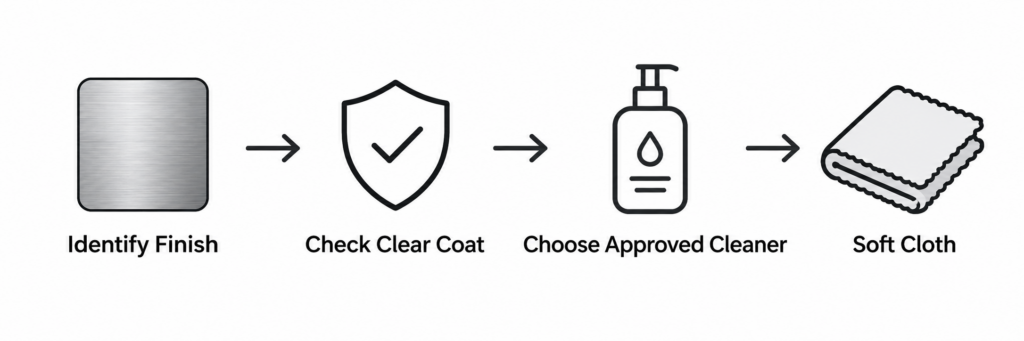
A good rule to follow is:
Identify the finish → check the care instructions → use the least aggressive approved cleaning method.
“Cleaning methods and cleaning agents are heavily dependent on the material the hood is fabricated from. Using the wrong product can have irreversible effects on the finish.”
~Modern Aire Team Insight
Cleaning a range hood involves more than washing the filters.
A custom hood may include:
These areas should not all be cleaned the same way.
Modern Aire’s removable stainless steel baffle filters are designed to capture grease before it moves farther into the ventilation system and can be cleaned separately from the decorative hood exterior.
The exterior may be raw metal, clear-coated, antiqued, painted or another specialty finish. A cleaner that works well on a stainless steel filter may be inappropriate for a brass or copper canopy.
One of the most common maintenance mistakes is cleaning the filters while ignoring the surfaces behind them.
“A common mistake is cleaning the filters but overlooking the accessible interior of the hood. Small grease particles can accumulate over time, so visible buildup should be cleaned rather than allowed to continue collecting.”
~Collin Herman
The hood is not intended to accumulate unlimited amounts of cooking grease. Over time, visible grease and fine particles can collect on accessible internal surfaces.
When the filters are removed for cleaning, inspect the surrounding canopy. Clean visible residue using a method approved for the material.
Routine maintenance does not mean dismantling the blower, wiring or electrical components. If grease is visible in an area that cannot be safely reached, contact Modern Aire or a qualified service professional.

Knowing that a hood is “brass” or “copper” is not always enough.
Modern Aire offers a wide range of finishes, including:
Some copper and brass finishes are designed to develop a natural patina, while others use a clear coat to help preserve their appearance.
Before using a degreaser, polish or household cleaner, determine whether the hood is:
Raw metal, living finish, clear-coated, antiqued or paint.
If you are unsure:
Modern Aire Team Guidance:
“Reach out to the manufacturer for instructions on the correct procedure.”
Finish | General Care Direction | Main Risk to Avoid |
Stainless steel | Soft cloth + approved non-abrasive cleaner | Scratching or wiping against the grain |
Clear-coated copper/brass | Mild cleaning + soft microfiber cloth | Abrasives or metal polish |
Living copper/brass | Finish-specific care | Accidentally removing the patina |
Zinc | Confirm exact finish first | Acids or unapproved metal polish |
Paint | Mild, non-abrasive cleaning | Harsh solvents or abrasive cleaners |
Stainless steel is durable, but it can still be scratched or marked by inappropriate cleaning.
For routine care:
Avoid abrasive pads, powders and harsh scrubbing.
Remember that the recommendation to place Modern Aire’s stainless steel baffle filters in the dishwasher does not mean the stainless steel canopy itself should be cleaned with strong dishwasher detergents.
Copper requires more caution because cleaning can change the appearance of the metal.
If your hood has a clear-coated copper finish, use gentle cleaning appropriate for the coating, such as a soft microfiber cloth with mild soap and water when recommended for the specific finish.
If the hood has an uncoated living finish, natural darkening and patina may be intentional.
Avoid automatically applying DIY copper-cleaning solutions involving vinegar, lemon, salt or metal polish. These products can remove or alter patina and may create a visibly different area on a large custom hood.
Brass should also be cleaned according to its specific finish.
Clear-coated or antiqued brass can typically be cleaned gently with a soft microfiber cloth and mild, finish-safe cleaner.
Uncoated brass is different because natural patina may be part of the desired appearance.
Do not polish a living brass hood simply because one area appears darker. Metal polish is designed to change the surface and may remove the patina the homeowner intentionally selected.
When in doubt, confirm the exact brass finish before using any product designed to brighten or restore metal.
Zinc is another material where the exact finish matters.
Modern Aire offers both Jitterbug Raw Zinc and Jitterbug Zinc, so a generic “zinc cleaner” should not automatically be assumed to be suitable for both.
Avoid experimenting with:
Start with the care instructions for the specific finish. If the finish cannot be confirmed, contact Modern Aire before applying a stronger product.
There is no single cleaner that is unsafe for every finish, but aggressive products should never be assumed to be appropriate.
Use caution with:
The important takeaway is:
“Natural” does not automatically mean finish-safe.
Vinegar and lemon are acidic. Metal polish intentionally changes metal surfaces. Even a household degreaser can affect clear coats, painted or specialty finishes.
Always verify compatibility first.
Custom range hoods often include decorative areas where grease can collect:
Bands, straps, seams, rivets, trim and transitions between materials.
Modern Aire Team Insight:
“Grease buildup can be stripped down with diluted degreasers, but it is important to verify that the degreaser is safe for the material the hood is made of.”
Once compatibility is confirmed:
If the hood combines multiple finishes, treat each material separately.
A product suitable for a painted canopy may not be appropriate for brass straps or stainless steel trim.

There is no universal schedule because cooking habits vary.
Someone who regularly fries, sears or cooks with oil may need to clean the hood exterior more frequently than someone who primarily boils or bakes.
Use the condition of the hood as your guide:
Fingerprints or dust: wipe before they combine with grease.
Visible cooking film: clean before it hardens.
Grease around seams or underneath the canopy: address it when buildup becomes noticeable.
Baffle filters: clean regularly according to your cooking frequency.
Frequent, gentle maintenance is usually preferable to waiting until heavy residue requires aggressive cleaning.
Some finish changes are expected.
Uncoated copper and brass can develop patina. A large living-metal hood may also age differently in areas that are touched or exposed to different environmental conditions.
That is normal.
Changes that deserve further attention may include:
If you are unsure, stop cleaning rather than trying a stronger product.
Contact Modern Aire or your dealer and provide photos, the hood model and finish information when available.
A custom range hood should be cleaned according to its finish, not simply its appliance type.
The best routine is straightforward:
Know the finish. Clean the filters regularly. Inspect accessible interior surfaces. Remove visible grease before it becomes a heavy buildup. Use only products appropriate for the exact material and coating.
When the finish is uncertain, contacting the manufacturer before experimenting with polish, degreaser or strong cleaner can prevent permanent damage.
Explore Modern Aire’s Materials, review Product Information, or Contact Modern Aire for finish-specific guidance.
Yes. Turn the hood and lighting off and allow surfaces to cool before cleaning. Avoid introducing moisture around switches, lighting components or electrical areas.
Do not assume steam is safe for a custom finish. High-temperature moisture can reach seams, coatings and electrical areas. Use a steam cleaner only if it is specifically approved for your exact hood and finish.
Not without confirming the original finish first. An aftermarket wax or sealer may alter a living patina or interact with an existing clear coat. Contact Modern Aire before applying an additional protective coating.
Treat each material separately. For example, a product that is appropriate for a paint canopy may not be appropriate for brass straps or stainless steel trim.
Stop cleaning and do not immediately apply another chemical or polish to correct the problem. Take photos of the affected area and contact Modern Aire or your dealer with the finish information before attempting restoration.